
Training and match nutrition
What and when you eat around training sessions and matches will have a big impact on how well you perform and how quickly your body recovers between exercise bouts.
Pre-match meal
This should be eaten 2-3 hours before exercise and should contain a source of carbohydrates and protein to help top up fuel levels in the body and feed your muscles. Avoid eating unfamiliar foods or too much as this may cause stomach discomfort during the training session or match.
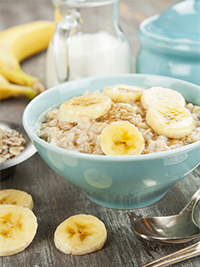
Pre-exercise meal ideas
- Porridge made with milk and chopped banana
- Cereal with milk, a piece of fruit and yoghurt
- Toast with cheese, sliced tomato and glass of milk
- Baked beans on toast with fruit and glass of milk
- Spaghetti Bolognese
- Scrambled egg and wholegrain toast with a piece of fruit and yoghurt
- Sandwich with lean meat / fish/ cheese and salad
A high carbohydrate snack should be eaten around 30 minutes before exercise to help top up energy levels.
High Carbohydrate Snacks

- Bread roll with banana
- Small glass of homemade smoothie e.g. milk blended with yogurt and mixed fruit
- Cereal bar and yogurt
- Handful of dried fruits and nuts
- Jam or honey sandwich with a piece of fruit
Getting your nutrition strategy right before and during the game can help delay fatigue and prevent performance from suffering. Carbohydrates are our muscles primary fuel source during games. They are broken down and used by our muscles to support high intensity activities such as repeated sprinting, jumping, kicking and tackling throughout the game.
Additionally, carbohydrates fuel the brain, supporting decision making, reaction time and concentration to prevent mistakes from being made which can be the difference between winning and losing a game! Therefore, fueling with carbohydrates before and during the game is essential to ensure both physical and mental performance are optimized.
Players often make the mistake of putting too much of an emphasis on their pre-exercise meal, often neglecting to prioritize their nutrition in the days preceding the game. Although, your pre-exercise meal is important to get right, it has been shown that even when GAA players meet carbohydrates requirements in their pre-exercise meal, it is not enough to make up for a reduced intake of carbohydrates in the days prior to exercise.
It is advised to consume 7g of carbohydrates for every kilo you weigh in the 24 – 36 hours prior the game (e.g. 80kg athlete would require 560g of carbohydrates).
Interested in finding out more?
If you would like any more information about any of the resources within the PALs Microsite you can contact a member of our team.


Ulster GAA / CLG Uladh

